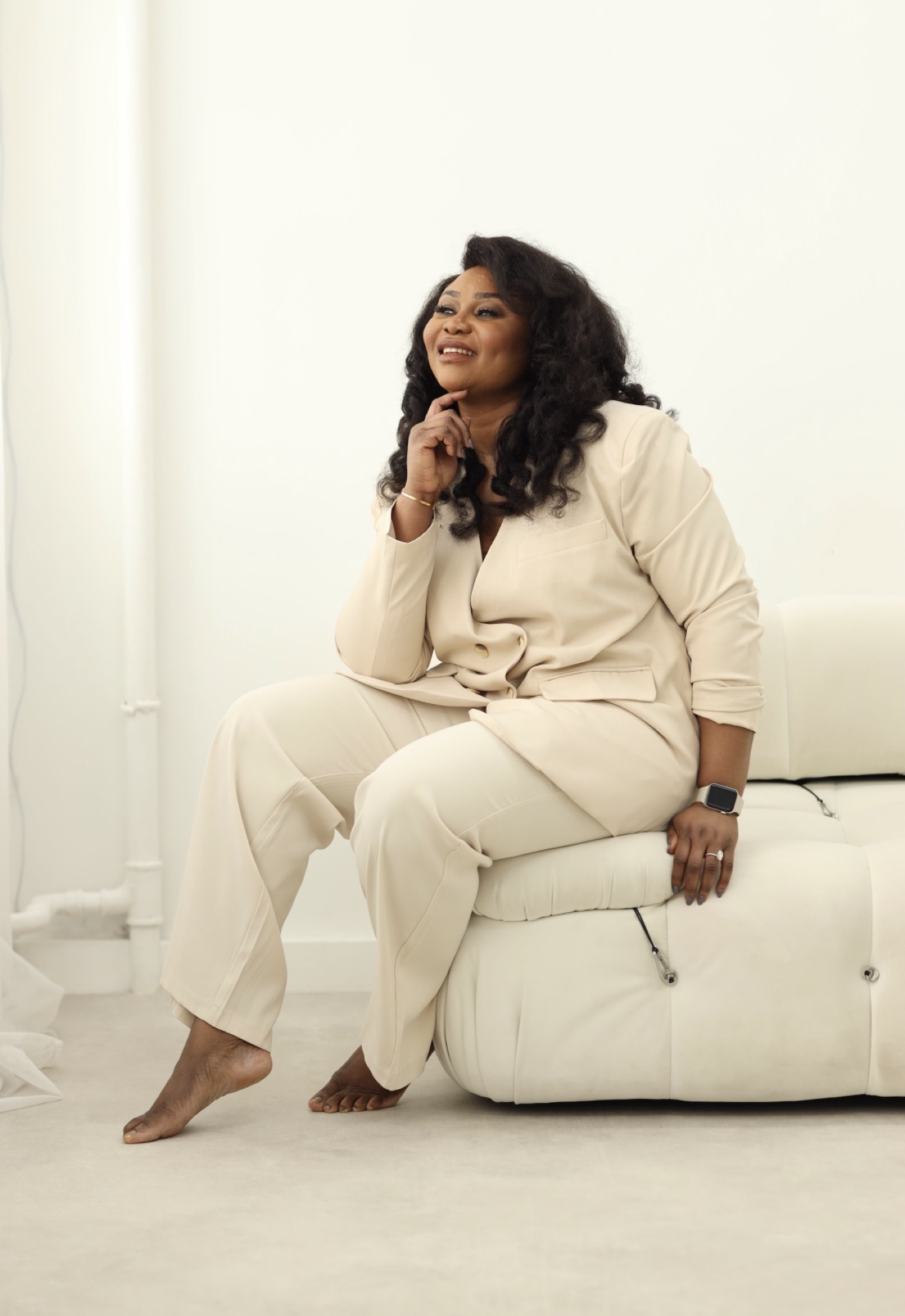


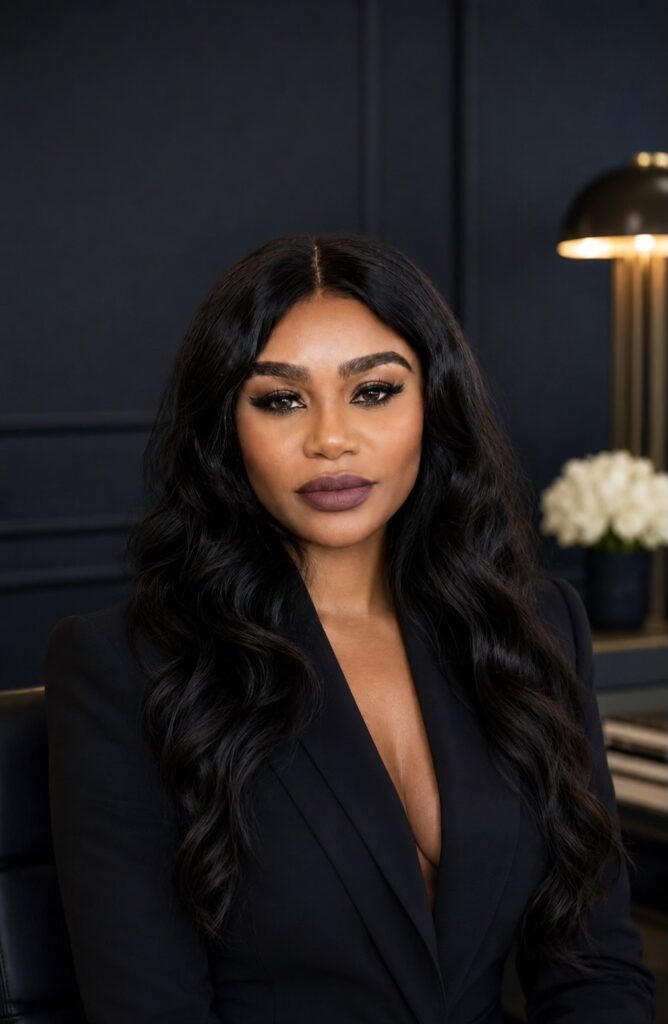
Fashion rarely rewards stillness, but after more than a decade of building Wana Sambo, the designer chose to step away. Four years later, following a period of personal growth, a deepened faith and a new perspective on life beyond the business, she returns with A New Thing, a collection inspired by Isaiah 43:19 and the possibility of beginning again.
In conversation with SCHICK, Wana Sambo reflects on the woman she has become, the creative philosophy guiding her return and her vision for building a Nigerian fashion brand that stands the test of time. Because sometimes, the next chapter begins with knowing when to pause.
The Interview
SCHICK: You founded Wana Sambo in 2010 and built it for more than a decade before taking a four-year creative sabbatical. What did you need that period of stillness to give you that you could not have found while constantly creating?
Wana Sambo: I relocated to the UK, got married and began a new chapter of my life during the COVID-19 pandemic. It was a period that naturally required me to slow down and adjust to a completely different way of living. Just like it did everyone else. I had to move countries during the pandemic in 2020, I was navigating marriage, a new environment and a new identity outside the life and business I had spent a decade building.
For so long, my life had been centred around creating, building and moving forward at Wana Sambo. Suddenly, I had the opportunity to step back, be present and experience life beyond the demands of running Wana Sambo. That stillness gave me room to reflect on how far I had come, what I truly valued and what I wanted the next phase of my life to look like.
It also deepened my relationship with God and taught me that not every season requires you to be in motion. Sometimes, growth happens in the quiet moments, when you allow yourself to be present rather than constantly striving towards the next thing.
Looking back, I understand that the period was not simply a break from fashion. It was a season of personal growth that gave me a different perspective on life, creativity and purpose. When I eventually returned to Wana Sambo, I was not returning as the same woman who had stepped away. I was returning with greater clarity, a deeper appreciation for the journey and a renewed understanding of what I wanted to build.
SCHICK: What was the hardest part about stepping away from a brand you had spent so many years building, and what did you discover about yourself in that absence?
Wana Sambo: The hardest part was stepping away from something that had become such a significant part of my identity. Wana Sambo was not just a business I had built; it was an expression of my creativity, my ideas and my belief in the Nigerian woman. Walking away from the day-to-day meant learning to sit with the uncertainty of what came next.
In that absence, I discovered that my creativity was not dependent on constant activity. I was still a designer, even when I was not designing collections. I was still a founder, even when I was not actively building the business.
I also learnt to trust timing. I had spent years pushing, building and making things happen. The sabbatical taught me that there is strength in allowing yourself to pause without interpreting that pause as failure.
“I was still a designer, even when I was not designing collections. I was still a founder, even when I was not actively building the business.”
SCHICK: You describe this return as a rebirth. What exactly has been reborn: the brand, your creative voice, your relationship with fashion, or all three?
Wana Sambo: All three, but I would say the greatest transformation has been in my relationship with myself and, consequently, with the brand.
Wana Sambo has always had a clear identity. We have always believed in creating clothing that makes a woman feel graceful, elegant and alluring. That has not changed. What has changed is the perspective from which I create.
I am less interested in creating simply to keep up with the pace of the industry. I am more interested in meaning, longevity and how a piece of clothing makes a woman feel. My creative voice has become more considered, and I have a clearer understanding of what I want the brand to represent.
The rebirth is not about becoming a completely different brand. It is about returning with a deeper understanding of who we have always been and the confidence to express that more clearly.
SCHICK: You came back with A New Thing, a collection inspired by Isaiah 43:19. Why was this the story you needed to tell at this particular point in your journey?
Wana Sambo: A New Thing was a very personal starting point for this new chapter. Isaiah 43:19 speaks about God doing a new thing, making a way in the wilderness and creating streams in the wasteland. That message resonated deeply with my own journey.
There had been a period when the future of Wana Sambo was uncertain. I had stepped away, life had changed, and I was no longer operating in the way I had for so many years. Returning required me to believe that something meaningful could emerge from a season that had looked like an ending.
I wanted the collection to reflect that experience, not necessarily through literal interpretations of the scripture, but through the feeling of beginning again. There is something powerful about recognising that a new chapter does not erase what came before; it builds on it.
For me, A New Thing is a testament to faith, possibility and the courage to begin again.
SCHICK: The collection explores softness and strength, precision and ease, movement and structure. How did those contrasts translate into the way you designed the clothes?
Wana Sambo: I have always been interested in the balance between how a woman presents herself and how she wants to feel. She can be strong without losing her softness, and she can be feminine without compromising her authority.
Those contrasts informed the silhouettes, the structure of the garments and the way they move with the body. I wanted pieces that felt considered but never restrictive, with enough structure to create a beautiful shape and enough ease to allow a woman to move comfortably through her day.
There is a certain discipline in good design, but the finished garment should not feel as though the wearer is working hard to wear it. It should feel natural.
Ultimately, I want the clothes to support the woman wearing them. She should not have to choose between looking polished and feeling like herself.
SCHICK: The phrase “intentional stillness” comes up strongly in the story of this collection. What did stillness actually look like for you creatively?
Wana Sambo: It meant resisting the urge to create simply because I could. It meant giving myself permission not to have an immediate answer to every question and not to rush every idea into a finished product.
Stillness also meant paying attention. Paying attention to what I was drawn to, what I had outgrown and what still felt true to me. It meant revisiting my own design language and asking whether each decision had a purpose.
There was also a spiritual dimension to it. My faith has always been important to me, but this season reminded me of the value of listening rather than always trying to make things happen through my own effort.
Creatively, intentional stillness is not the absence of ideas. It is the space to recognise which ideas are worth pursuing.
“Creatively, intentional stillness is not the absence of ideas. It is the space to recognise which ideas are worth pursuing.”
SCHICK: You pioneered workwear as ready-to-wear in Nigeria. When you started Wana Sambo, what did you see in the Nigerian woman that you felt the fashion industry was not addressing?
Wana Sambo: I saw a woman who was ambitious, capable and increasingly visible in professional spaces, but who still wanted to express her femininity through the way she dressed.
At the time, we did not have stores that retailed garments in various standardised sizes as the west did, so after intense research, analysing the African woman’s body vs her western counterparts, we created a size guide that fit both ends of the scale and designed garments that accentuated the African woman’s body while celebrating the western woman’s figure.
When we launched, we created workwear that went beyond simply being appropriate for the office. At Wana Sambo, wecreate clothing that consideres the Nigerian woman’s lifestyle, her ambitions and her desire to look and feel beautiful while getting things done. We have a jaiye-jaiye culture, so our garments are multifunctional and can transcend easily from day to night.
I believe every woman deserves clothing that is thoughtfully designed, available as ready-to-wear and suitable for more than one part of her life. She should not have to sacrifice her personal style to be taken seriously or have carry multiple outfits on days she has multiple events. Multifunctional designs are the answer to such days and at Wana Sambo this is what we specialise in.
This belief has been central to Wana Sambo from the beginning. I create timeless garments for women who are building careers, businesses, families and lives of their own, and who want their wardrobes to reflect the woman they are and are becoming as they evolve.
SCHICK: When you compare the Nigerian woman you were designing for in 2010 with the woman you are designing for now, what has changed, and what has remained the same?
Wana Sambo: The woman has become more visible, more connected to the world and, in many ways, more discerning about what she wants from fashion. She has access to a much wider range of designers, brands and influences, and she is increasingly conscious of the value she receives from what she buys.
I also think the conversation around personal style has evolved. Women are more willing to define elegance on their own terms rather than simply follow a prescribed idea of how they should dress.
What has remained the same is her desire to feel good in what she wears. She wants to feel beautiful, confident and comfortable in her own skin. She wants clothing that understands her life and makes getting dressed feel effortless.
That is the woman Wana Sambo has always been interested in. The world around her has changed, but our desire to create for her has not.
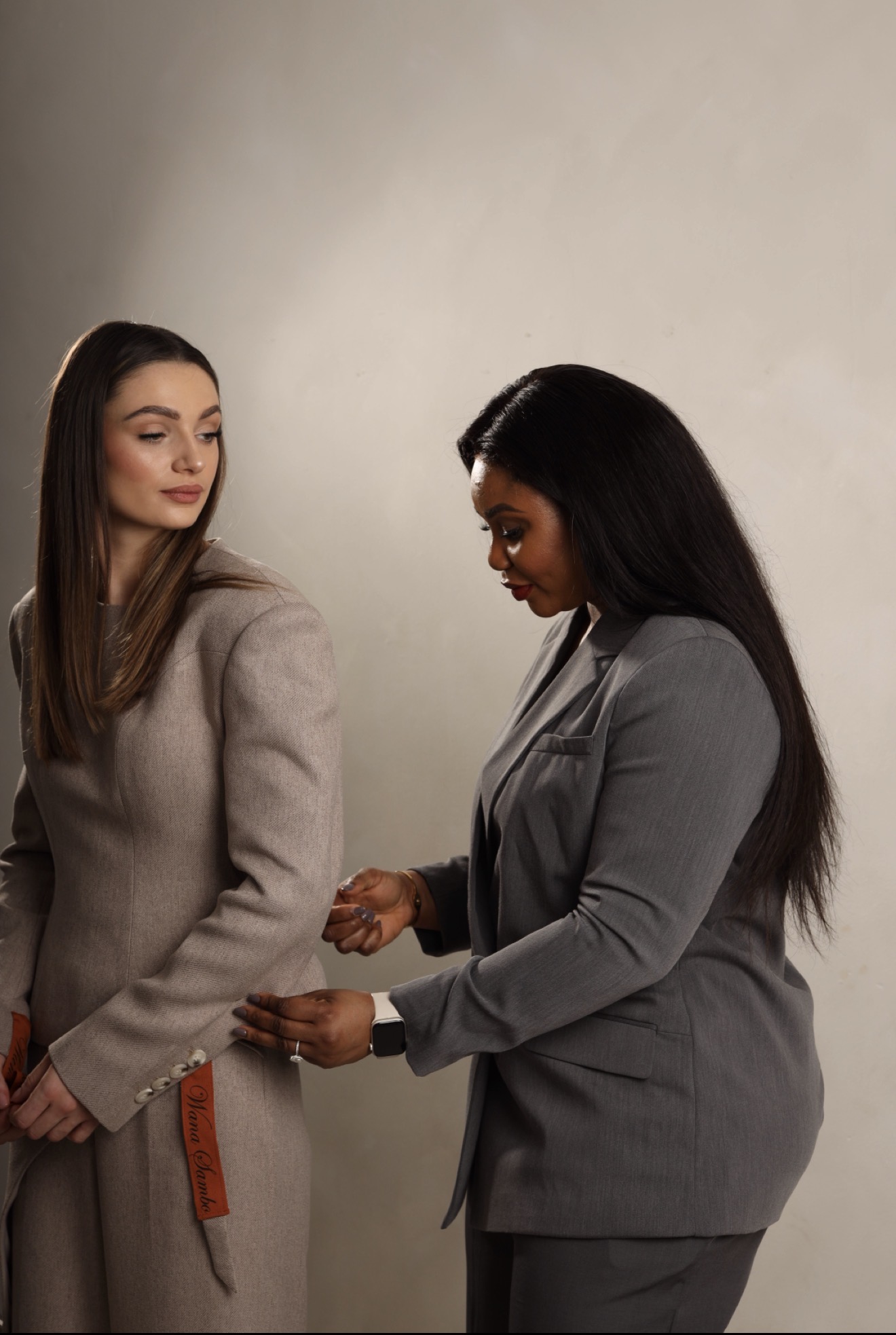
SCHICK: What parts of the Wana Sambo DNA are non-negotiable, even as the brand enters this new chapter?
Wana Sambo: Our commitment to femininity, elegance and thoughtful design is non-negotiable. The Wana Sambo Woman is graceful, elegant and alluring, and those qualities should come through in our designs without needing to be explained.
We are also committed to creating clothing that has a life beyond a single occasion or season. I want a woman to return to a Wana Sambo piece because she loves how it fits, how it feels and how confidently she can wear it. At the core of who we are, our DNA is our focus on Fabric, Fit & Finish.
Quality, attention to detail and a clear point of view matter to us. We are not interested in losing our identity in the pursuit of relevance.
And, personally, I want the brand to remain aligned with my values and my faith. That does not mean every garment needs to communicate a message explicitly. It means the way we create and build the business should reflect the principles that matter to us.
SCHICK: Three enduring classics were included in A New Thing in response to client demand. What did your customers tell you during your time away that influenced the way you approached this return?
Wana Sambo: One of the clearest messages when we were relaunching and understanding the Wana Sambo Woman post-sabbatical was that certain pieces had stayed with them. Even while the brand was not operating at the same level it had before, there were customers who remembered particular designs and wanted to know whether they would return.
That was meaningful to me because it showed that the relationship between a customer and a garment can outlast the moment in which it was purchased. Some pieces become part of a woman’s personal history. She remembers where she wore them, how she felt in them and why she loved them.
Including three enduring classics, the Anna Pair, the Jessica Pearson Pair and the Vivienne Dress, was a way of acknowledging that relationship. The return was not only about introducing something new; it was also about recognising what had already earned a place in our customers’ wardrobes. It reinforced my belief in designing classic garments, and that good design does not always need to be replaced.
Sometimes, the most valuable thing you can do is bring back something that still matters.
SCHICK: After four years away, did you feel pressure to return with something dramatically different, or did the sabbatical make you more interested in refinement and simplicity?
Wana Sambo: There was no need for me to return simply to prove that I had been away and come back different. I returned knowing the Wana Sambo Woman had not changed; she had only evolved. Our relaunch focus groups proved I was right.
My sabbatical made me more interested in being intentional and more conscious of the difference between creating because it is necessary and creating because of the need to do more.
For A New Thing, I wanted my design decisions to feel purposeful. I wanted the collection to be recognisably Wana Sambo while reflecting the clarity I had gained during my time away.
I have come to appreciate simplicity when designing. Simplicity is not necessarily about doing less. It is about understanding what matters enough to keep a garment timeless and relevant. With that knowledge, there is no pressure to create in misalignment, and it makes it that much easier to leave every dramatic thing out.
SCHICK: Wana Sambo is now relaunching in both Nigeria and the UK. What does this next phase of the brand need to achieve that the previous chapter didn’t?
Wana Sambo: This next phase needs to build a stronger foundation for longevity. The first chapter was about establishing Wana Sambo, introducing our point of view and showing that there was room for the kind of ready-to-wear we wanted to create. We were building recognition and proving the concept.
Today, we are more deliberate about how we grow, how we serve our customers consistently and how we build a business that can sustain the creative vision behind it.
Operating across Nigeria and the UK gives us an opportunity to connect with women in different markets while remaining rooted in our Nigerian identity. I want the brand to grow beyond its founder without losing the perspective that made it distinctive in the first place.
Success in this chapter will not simply be measured by how much we produce or how quickly we expand. It will also be measured by the strength of our relationships with customers, the quality of our operations and our ability to remain relevant without compromising our values.
SCHICK: What do you think Nigerian ready-to-wear needs to do differently if it is going to build brands that can remain relevant and sustainable for decades, not just seasons?
Wana Sambo: I believe we need to think beyond the immediate excitement of launching a collection and selling same using the founder in multiple campaigns and product shots on socials. A brand is not built on beautiful clothes or the founders face/voice alone. Building a brand requires a clear identity, consistent quality, sound business decisions and a genuine understanding of the customer.
We need to invest in the less visible parts of building a fashion business: production systems, people, customer service, inventory management and the financial discipline required to operate sustainably. Creativity and Visibility are essential, but they need a business structure that allows them to survive and transcend generations.
I also believe we need to take our customers seriously over the long term. We should understand what they return for, what they value and what makes them trust us enough to buy from us again.
Trends will always come and go. The brands that endure are those that know what they stand for, evolve thoughtfully and build relationships that go beyond a single purchase. Longevity requires both creative conviction and the willingness to keep learning.
SCHICK: If the first chapter of Wana Sambo was about building and establishing the brand, what is this new chapter about?
Wana Sambo: This chapter is about building with greater clarity, intention and purpose.
The first chapter taught me how to start, how to take an idea and turn it into something tangible, and how to keep going when building a business demanded more than I had anticipated. This chapter is informed by those experiences, but also by everything I learnt when I stepped away. This time, we are relaunching from experience.
I want Wana Sambo to become a brand with a lasting place in the lives of the women we dress. I want us to create pieces they treasure, build a business that is sustainable and establish a legacy that is bigger than any one collection or moment.
On a personal level, this chapter is also about understanding that ambition and stillness can coexist. I can be deeply committed to building something without allowing the building of it to consume every part of me.
Wana Sambo began with a vision in 2010. Today, that vision continues with more perspective, a stronger sense of purpose and a renewed appreciation for the journey. A New Thing is not the end of one story or the beginning of an entirely unrelated one. It is the continuation of a story that I now understand differently.
“I can be deeply committed to building something without allowing the building of it to consume every part of me.