

What happens when the rain stops, the world grows quiet, and familiar things begin to look entirely new? For Lisa Folawiyo, the answer is After Rain Vol. 1, a collection that captures the beauty of this fleeting moment through unexpected textures, intricate craftsmanship and a renewed sense of creative freedom.
Presented around an intimate dinner table at Lagos Fashion Week, the collection marks a fresh chapter for the Nigerian designer. In this conversation with SCHICK Magazine, she reflects on the inspiration behind the collection, the evolution of her signature aesthetic and the beauty of discovering new possibilities in the familiar.
- After the rain, everything feels a little different.What was the first image or feeling that inspired After Rain Vol. 1?
The first image that came to mind was soft, diffused light,the moment the rain gives way and the skies begin to clear. The feeling that followed was one of calm and serenity
- The collection moves away from the traditional runway.What does presenting the clothes in an intimate dinner setting allow you to express about the Lisa Folawiyo woman?
Moving away from the traditional runway allowed us to create a more intimate expression of the LF woman and the world she inhabits. She is expressive, curious and deeply engaged with the world around her. She appreciates fashion, but also the experiences, conversations and connections that surround it.
We wanted to create a more relaxed affair for our guests, one that allowed them to experience the collection without the formality and pace of a traditional runway presentation. The five-course dinner, specially curated for the evening, was central to this intention. It created room for conversation, connection and a more leisurely appreciation of the clothes.
Ultimately, we wanted the collection to exist within a living, breathing environment, where fashion, food and culture came together. It was an opportunity to invite our guests into the world of Lisa Folawiyo, rather than simply have them observe it from a distance.
- If you could steal one look from the collection for your own wardrobe, which would it be?
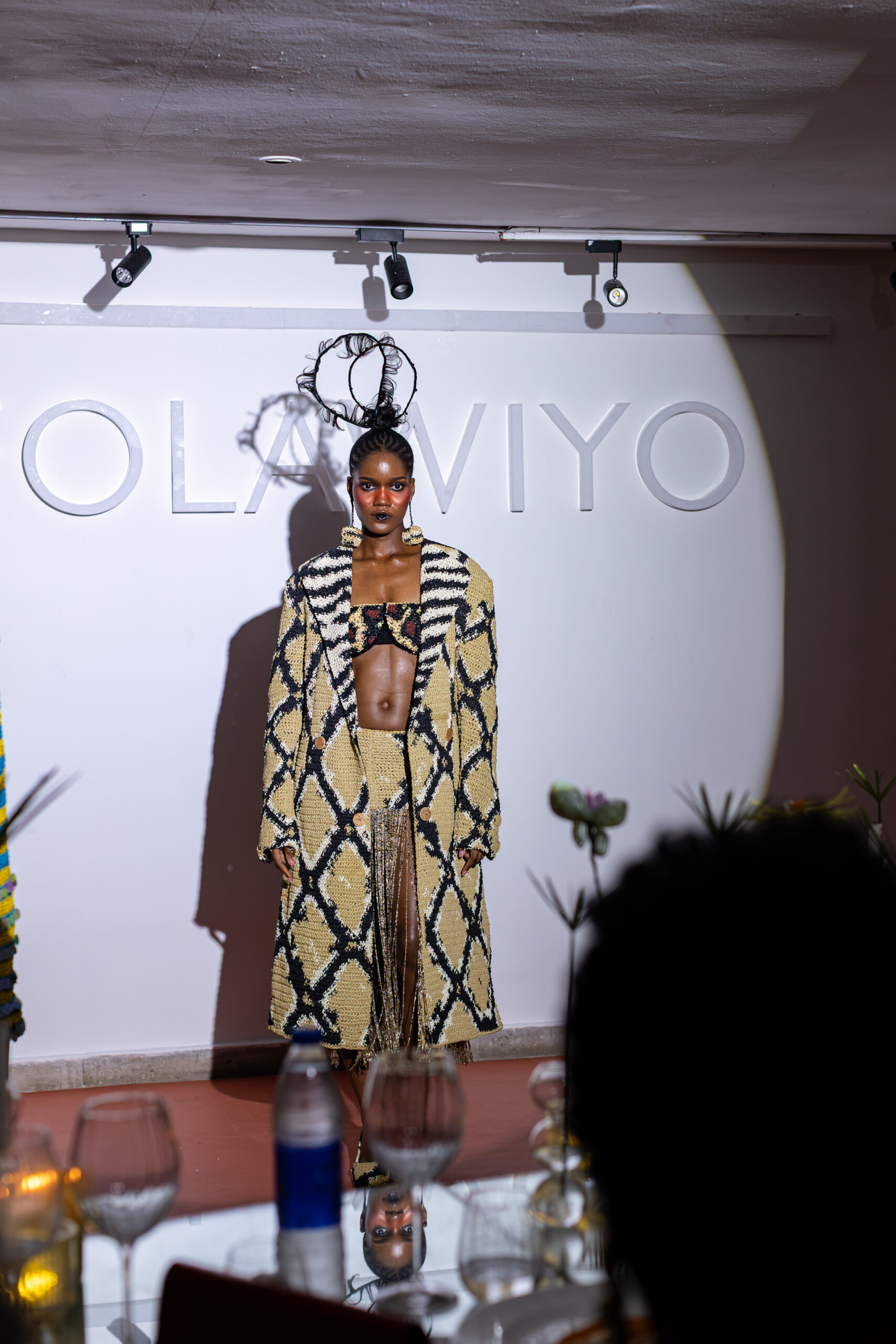
That’s a tough choice. Give me everything! But if I absolutely had to choose, it would be the Snakeskin Coat (LOOK 22) We’ve reworked the raffia, and transformed it into something quite unexpected. The handwoven raffia gives the coat such beautiful texture, structure and personality which is an example of how we continue to push the possibilities of familiar materials.
- Your work has always had a distinctive relationship with print and embellishment. What felt exciting about exploring texture and craftsmanship through the lens of this collection?
Print and embellishment have always been where I feel most at home, so what excited me this time was letting them breathe differently. After Rain is about calm, and I wanted to see how texture could carry that feeling. There’s a play between softness and structure throughout: fringe that moves when you do, raffia with real weight, lace and sequins that catch the light. These are materials we know well, and the joy was in asking what else they could do. Because the collection lived around a dinner table, guests could lean in and see the work up close. Craftsmanship deserves that kind of attention.
- Is there a particular look in After Rain Vol. 1 that surprised you during the creative process? Perhaps something that took on a life of its own?
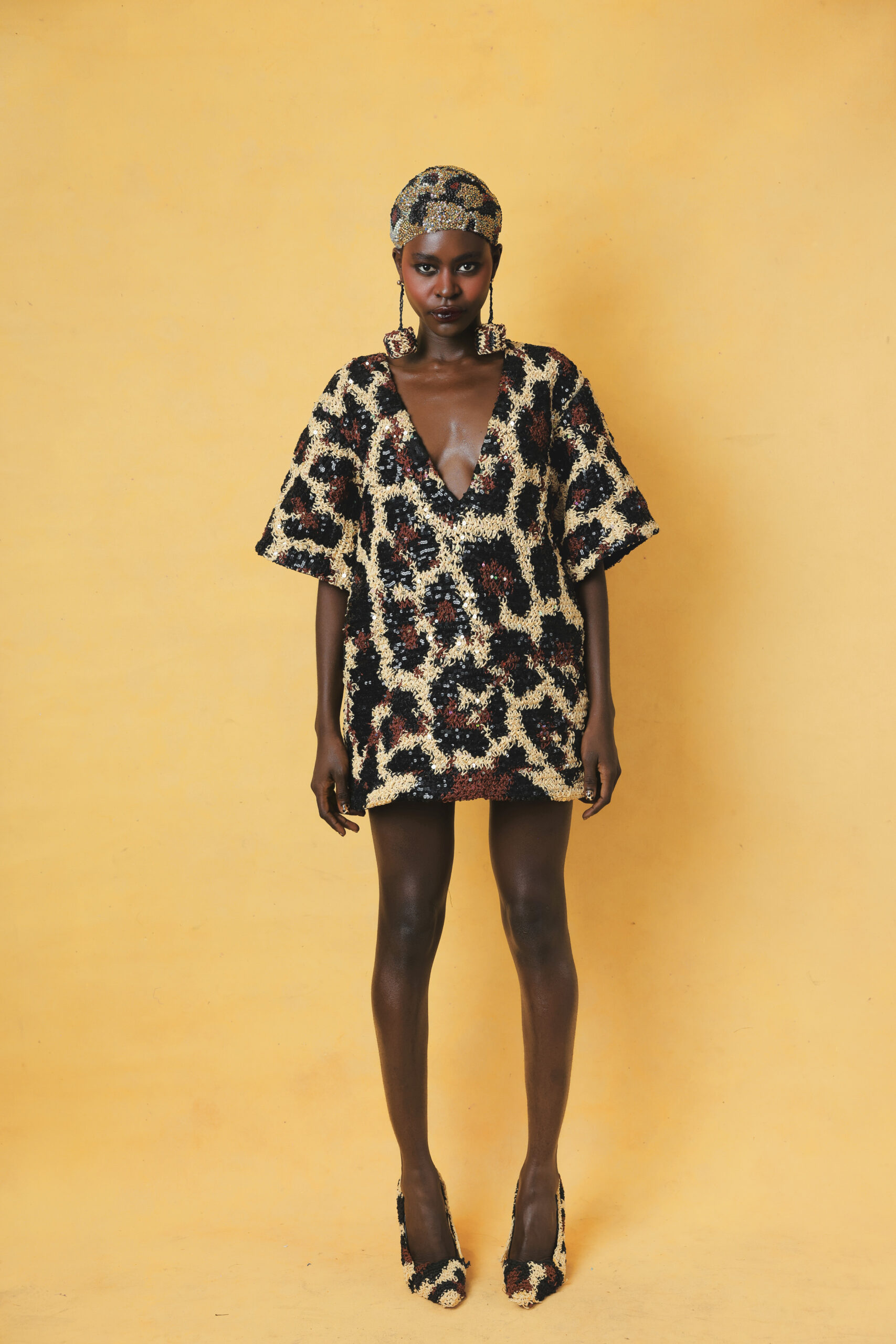
The leopard mini (LOOK 13) surprised me most. Leopard print usually sits on the surface of a fabric, but here the pattern is built into the weave itself. Because the raffia is handwoven, every spot has its own depth and texture, and the dress catches the light in a way a print never could. I expected it to feel bold and a little loud, but it turned out to have this relaxed, easy quality. It’s oversized, it moves, and it feels effortless. It took on a personality of its own, which is the best thing a piece can do.
- The collection draws on the atmosphere of theNigerian rainy season. How did you translate something so familiar and sensory into the language of Fashion?
You know that moment when the rain stops and there is a cooler sensation in the air, everything is still and a little washed, and there’s a softness to the environment. So I started with how that feels rather than how it looks.
That feeling shaped the size of the collection too. We usually show around forty looks, but After Rain is a smaller volume of twenty four. After the rain, the environment gets quieter, and you notice fewer things more closely. I wanted that same sense of space, with each piece given room to be looked at properly.
It also shaped the palette: soft pinks, marigold, blues, all a little hazy, like colour after a storm. Fringe sways and sequins catch the light like water on leaves. Then I balanced that softness with structure by incorporating raffia and the sharper tailoring, because calm after the rain isn’t necessarily limp. It’s grounded.
- If you had to style one look from After Rain Vol. 1 for a night out in Lagos, where would you wear it, and who would you want to see wearing it?
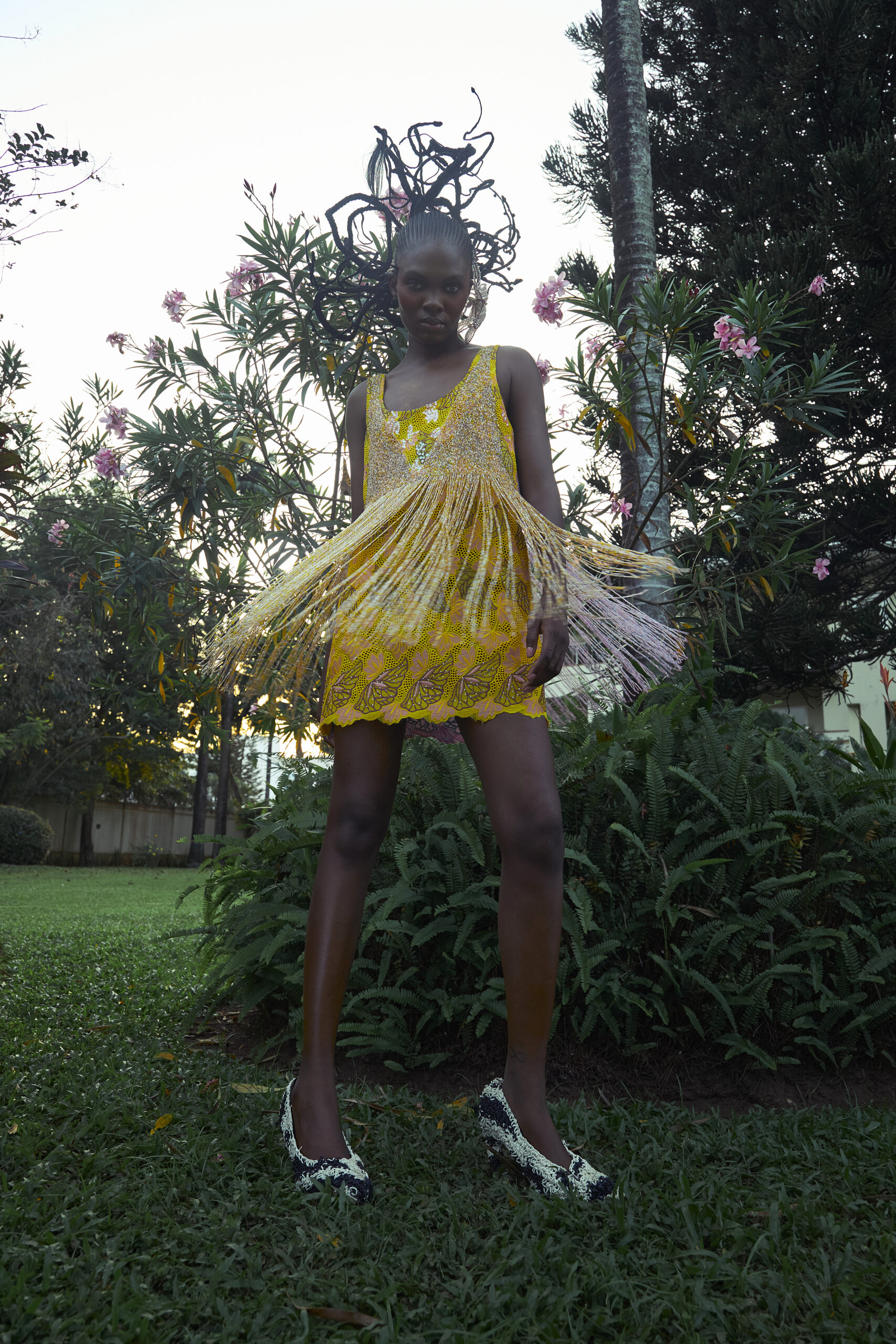
The pink and yellow lace dress (LOOK 9), for New Year’s.It’s covered in beading and fringe that moves with every step, so it’s made for a night when you’re meant to dance! I can picture it at midnight, with the fringe swinging and everyone counting down. It’s celebratory without trying too hard.
As for who I’d love to see in it, Olivia Dean for sure! She’d wear the pieces so well!
- As the brand continues to evolve, how do you approach the balance between the signatures that have become synonymous with Lisa Folawiyo and the desire to explore something new?
The house has a language people know: print,embellishment, colour, the joy of it. That doesn’t change.
What I keep asking is how to push it further. I want to improve, reinvent and innovate without ever losing what makes it ours. After Rain is a good example. The materials are ones we’ve worked with for years; silk, lace, raffia and Akwete, but we looked at them again and asked what else they could do. We even rethought how we present a collection, with smaller volumes through the year and a dinner table instead of a runway.
The signatures are where we begin, and curiosity is what keeps them alive.
- What is one detail in this collection that you would love a fashion editor to zoom in on? Something that might be missed at first glance but says so much about the work behind it.
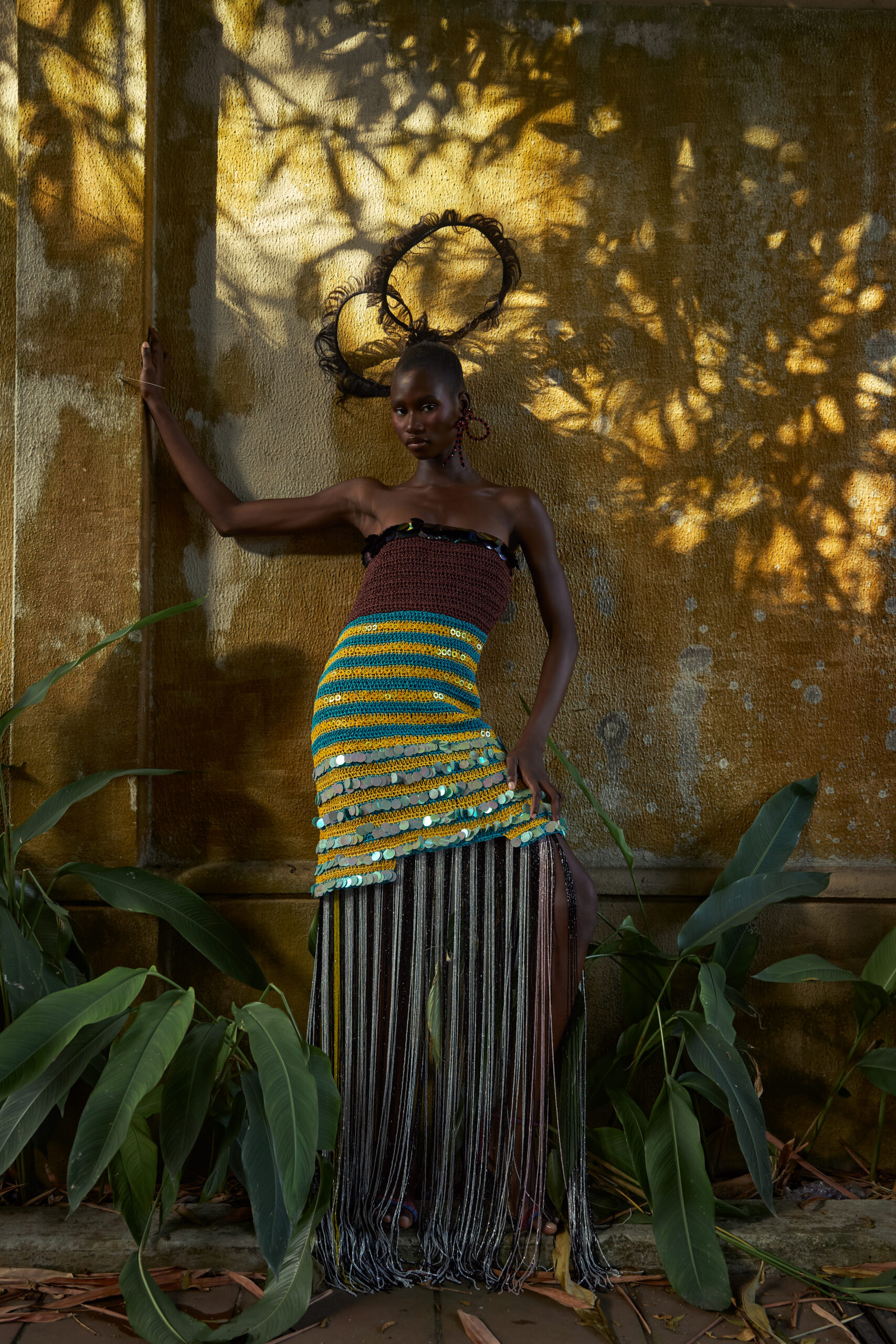
The strapless raffia dress! (LOOK 23) The real work is in what you can’t see. All the beaded fringe at the hem of the dress makes it very heavy. A strapless piece that weighs that much has to be engineered to stay exactly where it should, so a lot of the construction is hidden inside, making sure it sits securely and feels comfortable on the body.
Beautiful things only look effortless because someone has done the hard work underneath. The movement of the fringe and the sparkle of the sequins are what you see, but the structure is what lets you wear it
- Looking at After Rain Vol. 1, what feels mostdifferent about the designer you are today compared to the woman who presented her first collection?
When I presented my first collection, I wanted to show everything I could do. I think there’s a youthful urgency in that, and I love it, but today I’m a bit more comfortable with restraint.
After Rain Vol. 1 is a good example. It’s a smaller collection, and we presented it around a dinner table instead of on a runway. Years ago I might have worried about whether that was the ‘right’ way to do it. Now I ask what feels true to us and to the people we’re designing for.
What hasn’t changed is curiosity. I still want to push the boundaries, play with the materials and see what they can become. I just do it with more patience and a clearer sense of who I am.