


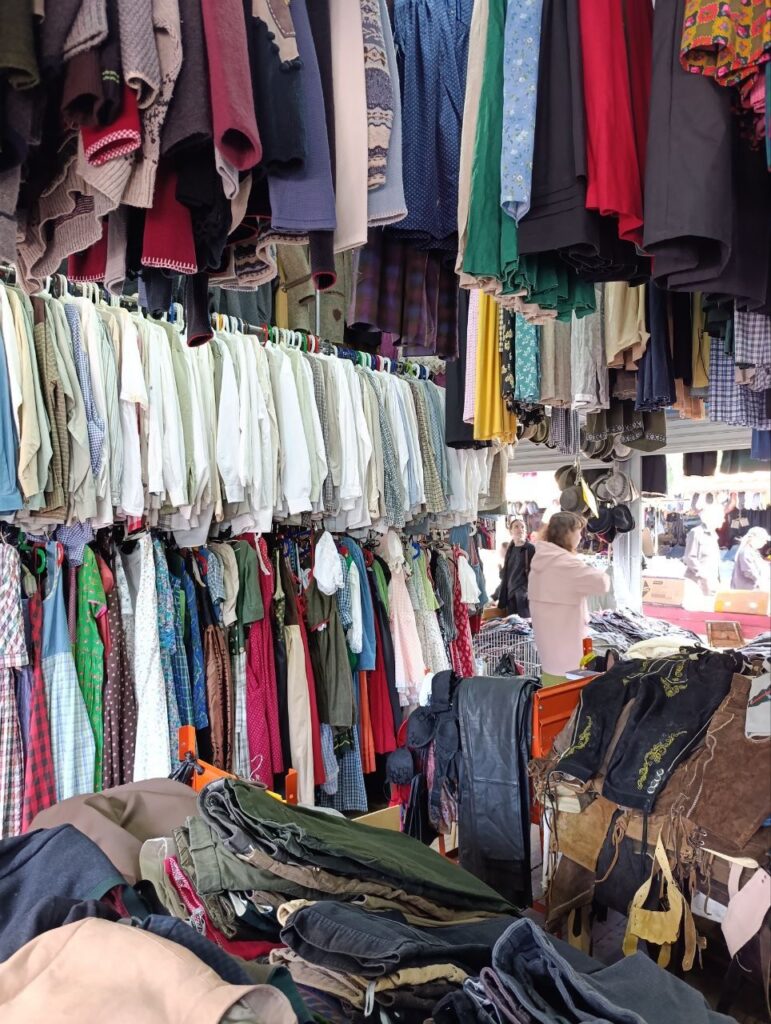
There was a time when buying second-hand clothes in Nigeria was something you didn’t talk about — especially not at school, not at church, not anywhere that required social standing. The “Bend Down Select” market was a necessity for some and invisible to others. Then Gen Z arrived. And they turned it into a cultural institution.
Walk through Yaba market on a Saturday morning and you will find something remarkable: University of Lagos students, content creators, and fashion-forward twenty-somethings hunched over piles of imported second-hand clothing with the focused energy of fashion buyers at a sample sale. They are not there because they can’t afford new. Most of them are. They are there because they understand something about style that fast fashion simply cannot replicate: uniqueness is not for sale at a chain store.
“I’ve found a Ralph Lauren cashmere jumper, a pair of vintage Levi’s, and a genuine YSL scarf — all in the same day in Yaba. Try finding that energy in a mall.”
— Bimpe A., 21, Vintage Fashion Seller & Content Creator
The Sustainability Angle They Actually Mean
Unlike some generations who wore sustainability as a badge without the receipts to match, Gen Z thrift culture in Africa is genuinely built on values — environmental, economic, and aesthetic. Fast fashion’s ecological cost is not abstract to a generation that has grown up watching Accra’s Kantamanto market receive 15 million garments of Western “donations” every single week, only to see unsold items pile up on Ghana’s beaches. When a SCHICK reader chooses a Yaba vintage over a fast-fashion haul, she knows what she’s doing and why.
- Go early — the best pieces go to the people who arrive before 9am
- Know your labels: check the care tag country of origin and brand before you dismiss something
- Think “silhouette first” — assess the cut before the colour; dye is easier than tailoring
- Build a tailor relationship: a good find plus a great tailor is an outfit money can’t replicate
- Don’t sleep on accessories — vintage bags, belts, and scarves are where the real discoveries live
- Wash everything before you wear it. This is non-negotiable and it shouldn’t need saying.
When Thrift Became Content
The rise of “thrift haul” content on TikTok and Instagram has transformed the social status of second-hand fashion in ways that no awareness campaign ever could. When a creator with 200,000 followers shows off a perfectly tailored vintage blazer she found for ₦2,000 in Oshodi, she makes the market aspirational rather than apologetic. She makes the hunt feel like an adventure rather than a limitation. She makes the whole exercise look like what it actually is: the most interesting way to get dressed.
The brands are watching. Several Lagos-based vintage and upcycling businesses have been built entirely on Instagram in the last three years, some of them turning over revenue that would make a boutique owner envious. The market for pre-loved and reworked clothing is not a niche anymore. It is a generation’s primary relationship with fashion. And for a generation that grew up watching vintage Dior sell for millions at auction, finding a ₦5,000 cashmere piece in a market pile doesn’t feel like settling. It feels like winning.